
Insurance Reports / Auto Claims
Reddit Credit Guide: CLUE Report Errors and Higher Auto Insurance Rates
Your auto quote went up, and the insurer points to an accident you don’t remember. Here’s the report behind that price, how to get it free, and what to do when it’s wrong.
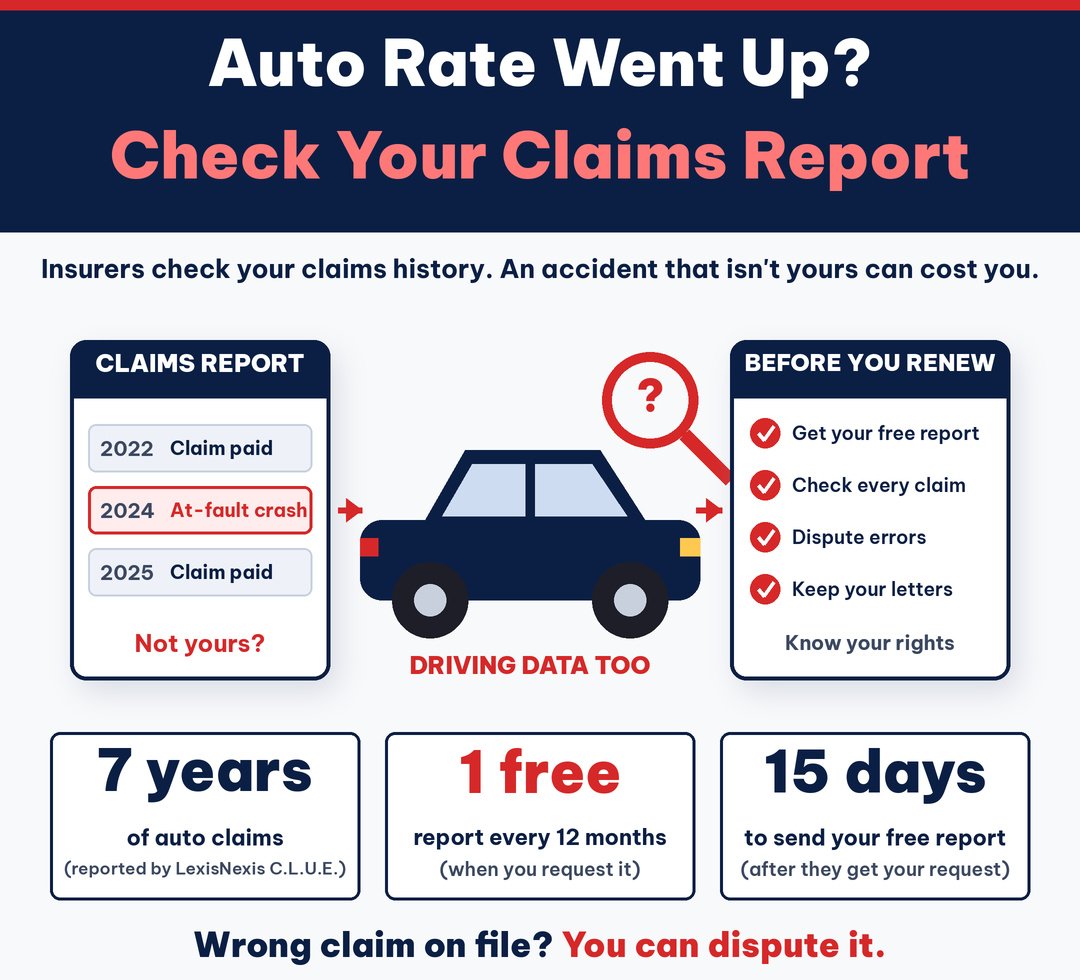
In this Reddit Credit Guide, we break down what people on Reddit are asking about the CLUE report: the auto renewal comes in higher, the insurer mentions a claim you don’t recognize, and you have no idea where it came from. Was it your credit? Your driving record? A lot of the time, it’s a claims report most people have never seen.
Credit Repair Co writes plain-English guides to credit reports, consumer reports and the rules behind them. Learn more about Credit Repair Co, see our services, or browse the full Reddit Credit Insights collection.
What a CLUE report is and why your auto insurer checks it
When you get a quote or renew your auto or home insurance, the insurer often looks at more than your credit. It may also pull a specialty report on your claims history. One of the best known is the LexisNexis C.L.U.E. report (short for Comprehensive Loss Underwriting Exchange). Most people just call it a CLUE report.
According to the CFPB, a CLUE report collects and reports up to seven years of auto insurance claims, plus seven years of home insurance and personal property claims, to help insurers make pricing and underwriting decisions. The CFPB also explains that specialty reporting agencies collect information about the claims you’ve made on policies like auto and homeowners insurance, may report on your driving record, and that insurers use these reports to choose the policies they offer you and the premiums you pay (CFPB).
So a CLUE report can play a big part in why your rate changed. These reports are covered by the Fair Credit Reporting Act (FCRA), which means you can see what’s in yours, and you have the right to dispute what’s wrong.
We covered insurance reports more broadly in our guide to insurance report errors, and life insurance and prescription history reports in our Milliman IntelliScript settlement guide. This one zooms in on auto: your claims history and your driving data.
Driving data: the other file behind your auto rate
Claims aren’t the only thing in the mix. The CFPB notes that LexisNexis also collects and reports driving behavior data, under the name Telematics OnDemand, for auto insurance pricing. That’s data about how a car is driven, not a claim you filed.
Here’s a real example of how that kind of data can travel. In January 2026, the FTC finalized an order against General Motors and OnStar. The FTC had alleged that GM used a misleading enrollment process and didn’t clearly disclose that driving data would be collected and sold to third parties. TechCrunch reported that the data came from GM’s Smart Driver feature and had gone to data brokers including LexisNexis and Verisk, and that GM discontinued the program in April 2024.
The final order, issued January 13, 2026, bars GM and OnStar from sharing covered driver data with consumer reporting agencies for five years. The order’s definition of that data includes things like location, hard braking, hard acceleration, hard cornering, crossing a set high-speed threshold, seat belt use and late-night driving.
You don’t need to drive a GM for this to matter. If your rate changed because of driving data you never agreed to share, or data that doesn’t match how you actually drive, ask your insurer which report and which company it relied on, and request that report too.
Red flags on your CLUE report
These are the situations worth a closer look, and they’re the same ones that come up again and again when people on Reddit ask why their premium jumped:
- Your auto quote or renewal went up, and the insurer pointed to an accident or claim you don’t recognize.
- An accident shows as your fault, even though the other driver was at fault.
- The same claim shows up twice, or a claim belongs to someone with a similar name.
- A claim was listed under your policy even though another driver on a different policy was involved.
- Your rate changed because of driving data you never agreed to share.
- You got a letter saying a consumer report affected your price or coverage, and the report has information you know is wrong.
One honest caveat: a claim that’s really yours, reported correctly, can stay on your CLUE report. What you’re looking for is information that’s wrong, incomplete, or belongs to someone else.
How to get your free CLUE report
Checking your CLUE report doesn’t cost anything. The CFPB says LexisNexis C.L.U.E. will give you one free report every 12 months if you ask, and companies required to provide free annual reports must do so within 15 days of getting your request. Requesting your own consumer reports doesn’t hurt your credit scores, either.
- Request it online. Go to the LexisNexis consumer portal (consumer.risk.lexisnexis.com) and request your Consumer Disclosure Report. LexisNexis says that after you submit an online request, it mails you a letter explaining how to access your report online.
- Or use mail or phone. LexisNexis offers a printable request form you can mail in, or you can call. The CFPB lists the phone number as 866-897-8126.
- Use your adverse action notice if you got one. The CFPB says an insurer that turns you down based on a consumer report must give you an adverse action notice with the name and contact information of the reporting agency, and you have the right to a free report from that agency.
What counts as adverse action? LexisNexis says an adverse action letter is sent when an insurer didn’t give you its best rate, or denied you insurance, raised your rates, limited your coverage or cancelled your policy (LexisNexis).
Reddit CLUE report tip: don’t wait for a bad quote. The CFPB suggests checking your reports before you shop for insurance, or if you’ve been denied coverage or offered higher premiums in the past. Not every agency has a file on everyone, and you have to request reports from each company separately (CFPB).
How to read your CLUE report claim by claim
When your CLUE report arrives, go line by line instead of skimming. For each claim, check:
| Check | What to look for |
|---|---|
| Is it yours? | A claim or accident you don’t recognize, or one that belongs to someone with a similar name. |
| Who was at fault | An accident shown as your fault when the other driver was at fault. |
| Duplicates | The same claim showing up twice. |
| Which policy | A claim listed under your policy when another driver on a different policy was involved. |
| Dates | Compare each claim date with your own records. Auto claims can be reported for up to seven years. |
Write down exactly what’s off. "This is wrong" is hard for anyone to investigate. "This 2024 claim shows me at fault, and here’s the police report showing I wasn’t" gives them something to work with.
How to dispute CLUE report errors
If something on your CLUE report is inaccurate or incomplete, the CFPB says you have the legal right to dispute it with the consumer reporting company and with the company that shared the information. For a claim, that’s usually the insurer that reported it. Under the FCRA, companies must conduct a reasonable investigation of your dispute, free of charge, and the company that provided the incorrect information must correct the error and notify all the consumer reporting companies it gave that information to.
- Dispute with LexisNexis, the reporting company, and include copies of your proof.
- Dispute with the insurer that supplied the claim, too. Fixing it at the source matters, because that company has to correct the error and notify every reporting company it sent it to.
- Keep your originals and send copies. Note the date you sent everything.
- Follow up. LexisNexis lets you request a Description of Process letter with the status of your disputes.
For a broader walkthrough of disputing errors across reports, see our credit report errors guide.
What to keep before you call anyone
- The quote, renewal notice, or denial that shows the higher price or lost coverage.
- Any adverse action notice from the insurer (it names the company whose report was used).
- Your claims report, if you requested it (for example, your LexisNexis C.L.U.E. report).
- Police reports, repair records, or anything showing you weren’t at fault or the claim isn’t yours.
Put it all in one folder, paper or digital. If the claim on your auto insurance claims report turns out to belong to someone else, that folder is your proof.
When a wrong claims report costs you money
If your CLUE report shows a claim or accident that isn’t yours, a wrong at-fault label or a duplicate claim, and it raised your price or cost you coverage, Credit Repair Co’s Program 2, a Free Report Error Review by Our Legal Partners may be worth a look. It covers errors on credit reports, employment background checks, tenant screening reports and insurance reports, including claims or accidents that aren’t yours. The attorneys we work with review your insurance report at no out-of-pocket cost to you and let you know whether they can help and what your options are. Under the Fair Credit Reporting Act, if the law was violated, a consumer may be entitled to compensation and to have inaccurate information corrected or deleted.
To be clear about what that is and isn’t: Credit Repair Co is not a law firm, and report error reviews are done by the attorneys we work with. A free review doesn’t guarantee that anyone can take the case or that you’ll get any particular outcome, and results vary from person to person. A corrected report also doesn’t automatically mean a lower premium, since insurers weigh many factors. Time limits can apply, so keep your quote, adverse action notice, claims report and proof together and reach out while the details are fresh.
CLUE report FAQ
What is a CLUE report?
It’s a claims history report from LexisNexis C.L.U.E. (Comprehensive Loss Underwriting Exchange). The CFPB says it reports up to seven years of auto insurance claims and seven years of home and personal property claims, which insurers use for pricing and underwriting.
How do I get my CLUE report for free?
Request it from LexisNexis at consumer.risk.lexisnexis.com or by phone at 866-897-8126. The CFPB says you can get one free report every 12 months, and companies required to provide it must do so within 15 days of your request.
Can a claim that isn’t mine raise my auto insurance rate?
It can. Insurers use claims reports to decide which policies to offer and what premiums to charge, so a claim that belongs to someone else, a wrong at-fault label or a duplicate claim can affect your price. You have the right to dispute it.
Who do I dispute CLUE report errors with?
Both the reporting company (LexisNexis) and the company that supplied the information, usually the insurer. The CFPB says the investigation is free, and the company that supplied wrong information must correct it and notify the reporting companies it sent it to.
Does checking my CLUE report hurt my credit?
No. The CFPB says requesting copies of your own consumer reports does not hurt your credit scores.
What if my insurer sent me an adverse action notice?
Keep it. The notice must name the reporting agency and give its contact information, and you have the right to a free copy of that agency’s report. Review it and ask for corrections of anything that’s wrong.
Related Reddit Credit guides
Want to keep going after this Reddit CLUE report guide? Start with our broader Reddit Credit Guide to insurance report errors, then see how a prescription history report led to the Milliman IntelliScript settlement. For the dispute process across all three credit bureaus, read our credit report errors guide. And for help with inaccurate items on your credit reports, see our page on credit report repair services.
The takeaway: 5 free, smart steps
- Request your free CLUE report (one every 12 months), ideally before you shop for insurance.
- Check every claim, every date and every at-fault label.
- Dispute errors with LexisNexis and with the insurer that reported them.
- Ask your insurer which report it used, especially after an adverse action notice or a rate change tied to driving data.
- Keep your quote, notices, report and proof in one folder.
A higher rate stings even when it’s fair. When it’s based on a claim that isn’t yours, it’s worth pushing back. Your CLUE report is free to check, and you have the right to dispute what’s wrong. Plenty of people only learn this report exists after the bill goes up, so you’re already a step ahead.
This article is based on the Credit Repair Co newsletter (November 24, 2026), CFPB guidance, the LexisNexis consumer portal, the FTC’s January 2026 order in its General Motors/OnStar case and TechCrunch reporting, as available on November 24, 2026. It describes CLUE reports and insurance claims reports in general, not any specific case. Reporting rules and company practices can change, and state laws vary.
Think a wrong claim is behind your auto rate? Call 415-569-3151 (Mon–Fri, 9am–5pm Pacific), visit Credit Repair Co, see our services, watch our reviews and results, read why thousands trust us, or contact us for a free review. Educational only. Not legal advice.
Sources: CFPB: LexisNexis C.L.U.E. (Comprehensive Loss Underwriting Exchange) and Telematics OnDemand; CFPB: Do auto and homeowners insurance companies share my information about claims?; LexisNexis Risk Solutions Consumer Disclosure portal; FTC: In the Matter of General Motors LLC, General Motors Holdings LLC and OnStar, LLC, Decision and Order, Docket C-4828 (issued Jan. 13, 2026); TechCrunch: The FTC’s data-sharing order against GM is finally settled (Jan. 14, 2026)